Poison ivy rash Symptoms and causes
Overview
Poison ivy rash is caused by an allergic reaction to an oily resin called urushiol (u-ROO-she-ol). This oil is in the leaves, stems and roots of poison ivy, poison oak and poison sumac.
Wash your skin right away if you come into contact with this oil, unless you know you're not sensitive to it. Washing off the oil may reduce your chances of getting a poison ivy rash. If you develop a rash, it can be very itchy and last for weeks.
You can treat mild cases of poison ivy rash at home with soothing lotions and cool baths. You may need prescription medication for a rash that's severe or widespread — especially if it's on your face or genitals.
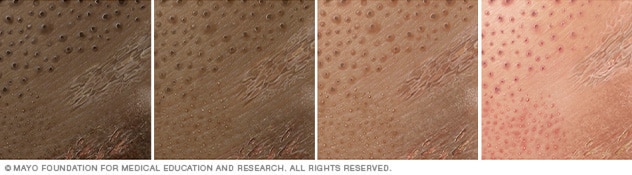
Contact dermatitis
Illustration of contact dermatitis on different skin colors. Contact dermatitis can appear as an itchy rash.
Symptoms
Signs and symptoms of a poison ivy rash include:
- Redness
- Itching
- Swelling
- Blisters
- Difficulty breathing, if you've inhaled the smoke from burning poison ivy
Poison ivy rash often appears in a straight line because of the way the plant brushes against your skin. But if you develop a rash after touching a piece of clothing or pet fur that has urushiol on it, the rash may be more spread out. You can also transfer the oil to other parts of your body with your fingers. The reaction usually develops 12 to 48 hours after exposure and lasts two to three weeks.
The severity of the rash depends on the amount of urushiol that gets on your skin.
When to see a doctor
Seek emergency medical attention if:
- You inhaled the smoke from burning poison ivy and are having difficulty breathing
See your doctor if:
- The reaction is severe or widespread
- Your skin continues to swell
- The rash affects your eyes, mouth or genitals
- Blisters are oozing pus
- You develop a fever greater than 100 F (37.8 C)
- The rash doesn't get better within a few weeks
Causes
Poison ivy rash is caused by an allergic reaction to an oily resin called urushiol. It's found in poison ivy, poison oak and poison sumac. This oily resin is very sticky, so it easily attaches to your skin, clothing, tools, equipment and pet's fur. You can get a poison ivy reaction from:
- Touching the plant. If you touch the leaves, stem, roots or berries of the plant, you may have a reaction.
- Touching contaminated objects. If you walk through some poison ivy and then later touch your shoes, you might get urushiol on your hands. You might then transfer it to your face or body by touching or rubbing. If the contaminated object isn't cleaned, the urushiol on it can still cause a skin reaction years later.
- Inhaling smoke from the burning plants. Even the smoke from burning poison ivy, poison oak and poison sumac can irritate or harm your nasal passages or lungs.
Pus that oozes from blisters doesn't contain urushiol and won't spread the rash. But it's possible to get poison ivy rash from someone if you touch plant resin that's still on the person or contaminated clothing.
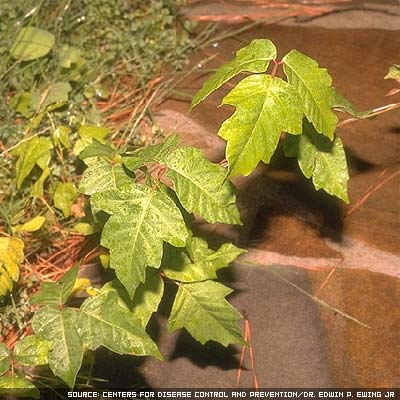
Poison ivy plant
A poison ivy plant typically has three leaflets branching off a single stem. It may grow as a low plant or bush or as a vine. Low-lying poison ivy plants are usually found among groups of weeds and other plants.
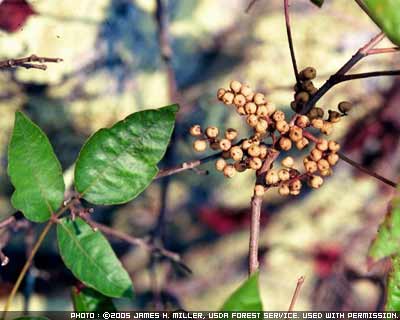
Poison ivy plant with berries
Poison ivy leaves vary greatly in their shape, color and texture. Some leaves have smooth edges, while others have a jagged, tooth-like appearance. In the fall, the leaves may turn yellow, orange or red. Poison ivy can produce small, greenish flowers and green or off-white berries.
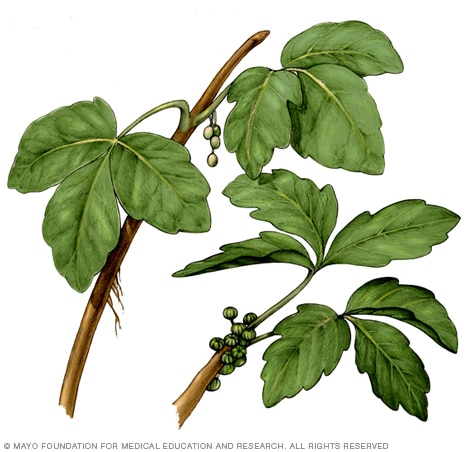
Poison ivy plant
Poison ivy grows three leaves per stem. It grows as vines or low shrubs in most climates.
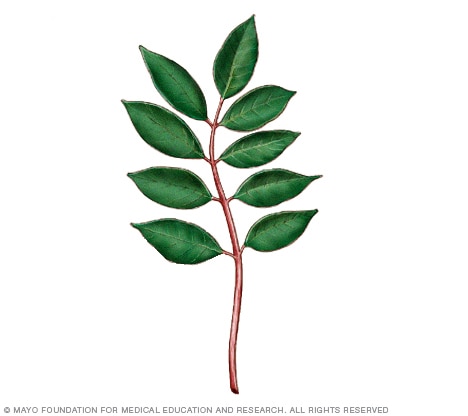
Poison sumac plant
The poison sumac plant has smooth-edged leaves and can grow as a bush or tree. Unlike poison ivy and poison oak, it doesn't grow in a three-leaf-per-stem pattern.
Risk factors
Your risk of a rash is increased if you participate in outdoor activities that put you at higher risk of exposure to poison ivy, poison oak and poison sumac:
- Cable or telephone line installation
- Camping
- Construction
- Farming
- Firefighting
- Fishing from the shoreline
- Forestry
- Gardening
- Hiking
- Hunting
- Landscaping
From Mayo Clinic to your inbox
Sign up for free and stay up to date on research advancements, health tips, current health topics, and expertise on managing health. Click here for an email preview.
Complications
If you scratch a poison ivy rash, bacteria under your fingernails may cause the skin to become infected. See your doctor if pus starts oozing from the blisters. Your doctor might prescribe antibiotics. Serious difficulty breathing and inflammation of the lining of the lungs may result from inhaling urushiol.
Prevention
To prevent poison ivy rash, follow these tips:
-
Avoid the plants. Learn how to identify poison ivy, poison oak and poison sumac in all seasons. When hiking or engaging in other activities that might expose you to these plants, try to stay on cleared pathways. Wear socks, pants and long sleeves when outdoors. If camping, make sure you pitch your tent in an area free of these plants.
Keep pets from running through wooded areas so that urushiol doesn't stick to their fur, which you then may touch.
- Wear protective clothing. If needed, protect your skin by wearing socks, boots, pants, long sleeves and heavy gloves.
- Remove or kill the plants. Identify and remove poison ivy, poison oak and poison sumac from your yard or garden. You can get rid of such plants by applying an herbicide or pulling them out of the ground, including the roots, while wearing heavy gloves. Afterward remove the gloves carefully and wash them and your hands. Don't burn poison ivy or related plants because the urushiol can be carried by the smoke.
-
Wash your skin or your pet's fur. Within 30 minutes after exposure to urushiol, use soap and water to gently wash off the harmful resin from your skin. Scrub under your fingernails too. Even washing after an hour or so can help reduce the severity of the rash.
If you think your pet may be contaminated with urushiol, put on some long rubber gloves and give your pet a bath.
-
Clean contaminated objects. If you think you've come into contact with poison ivy, wash your clothing promptly in warm soapy water — ideally in a washing machine. Handle contaminated clothing carefully so that you don't transfer the urushiol to yourself, furniture, rugs or appliances.
Also wash as soon as possible any other items that came in contact with the plant oil — such as outdoor gear, garden tools, jewelry, shoes and even shoelaces. Urushiol can remain potent for years. So if you put away a contaminated jacket without washing it and take it out a year later, the oil on the jacket may still cause a rash.
- Apply a barrier cream. Try over-the-counter skin products that are intended to act as a barrier between your skin and the oily resin that causes poison ivy rash.
CON-20376467
Mayo Clinic does not endorse companies or products. Advertising revenue supports our not-for-profit mission.
Advertising & Sponsorship
Mayo Clinic Press
Check out these best-sellers and special offers on books and newsletters from Mayo Clinic Press.
